Sowing the Sky Islands: Restoring habitat for New Mexico’s rarest butterfly
by Katy Silber, January 2026
High in the Sacramento Mountains, where forested peaks rise like islands above the desert, a single caterpillar recently captured national attention. The New York Times recently published an article about the last known Sacramento Mountains checkerspot butterfly (SMCB) larva. How did this caterpillar find itself alone? Historically, these butterflies flitted around the scenic sky islands of the Lincoln National Forest by the thousands in search of vibrant wildflowers. Now, they’ve become an emblem of how quickly a species can disappear when its habitat becomes less hospitable.
Over the past several decades, grazing pressure, recreation, and climate change have dramatically altered these high-elevation ecosystems known as sky islands. Feral horses have grazed native flowers down to the soil, while expanding bike paths and tree encroachment have fragmented once-connected meadows. Compounding these issues, climate change has reduced the critical precipitation these high-altitude plants need to survive, leaving the butterflies with fewer resources to feed and reproduce.
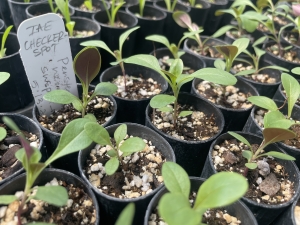
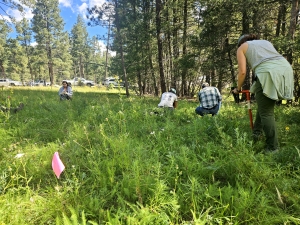
Despite these challenges, researchers have identified some key actions that can help restore these native habitats. Over the past five years, IAE has grown and installed over 7,000 plants within fenced areas in historic SMCB habitat. These plants, including the SMCB’s larval host plant (Penstemon neomexicanus) and several nectar species, aim to support the recovery of the SMCB and other native pollinators.
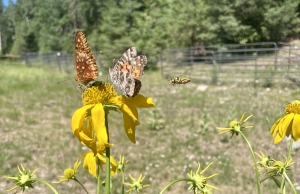
Early signs are encouraging. Pollinators are already using these restored patches, visiting blooms such as orange sneezeweed (Hymenoxys hoopesii) and cutleaf coneflower (Rudbeckia laciniata) planted by IAE staff. By rebuilding plant communities from the ground up, these efforts aim to reconnect fragmented meadows and restore the ecological conditions the SMCB needs to persist.
Many butterflies, including other checkerspot subspecies, are considered early indicators for the effects of climate change on wildlife populations, making it important to track their populations and subsequent effects on the environment. However, there are success stories, such as the recovery of the Taylor’s checkerspot butterfly in the Pacific Northwest.
This work would not be possible without collaboration. We are deeply grateful for the many wonderful partners who have contributed to this project, including the US Forest Service, Fish and Wildlife Service, University of New Mexico, New Mexico State University, Chicago Botanic Garden, New Mexico Native Plant Society, Albuquerque Biopark, Backyard Farms, Santa Ana Native Plant Nursery, and Conley’s Nursery.