Fall on the Farms: Installing the Native Crop Toolkit
By Katie Mast and Mia Brann, October 2026
From drought to record breaking late-season rains this year, the Farmer to Farmer (F2F) project team at the Institute for Applied Ecology’s Southwest Office has successfully endured a challenging and rewarding field season. In addition to hosting two webinars which can be found at the F2F Hub Website, the team has been hard at work monitoring, seed collecting, and planting in the middle Rio Grande watershed. The F2F Native Crop Toolkit project is funded by the Environmental Protection Agency. This Toolkit transforms conventional agricultural practices by using native plants to create four unique tools that support conservation and benefit farmers: native cover crops, native pollinator hedgerows, native seed production fields, on-farm habitat restoration.
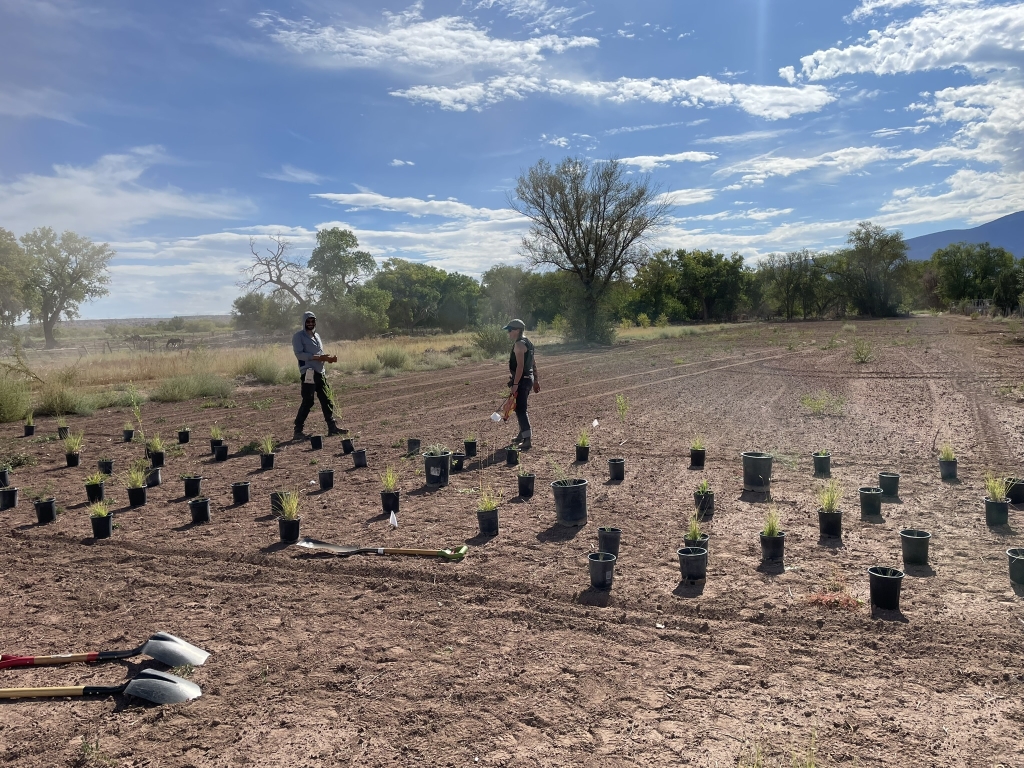
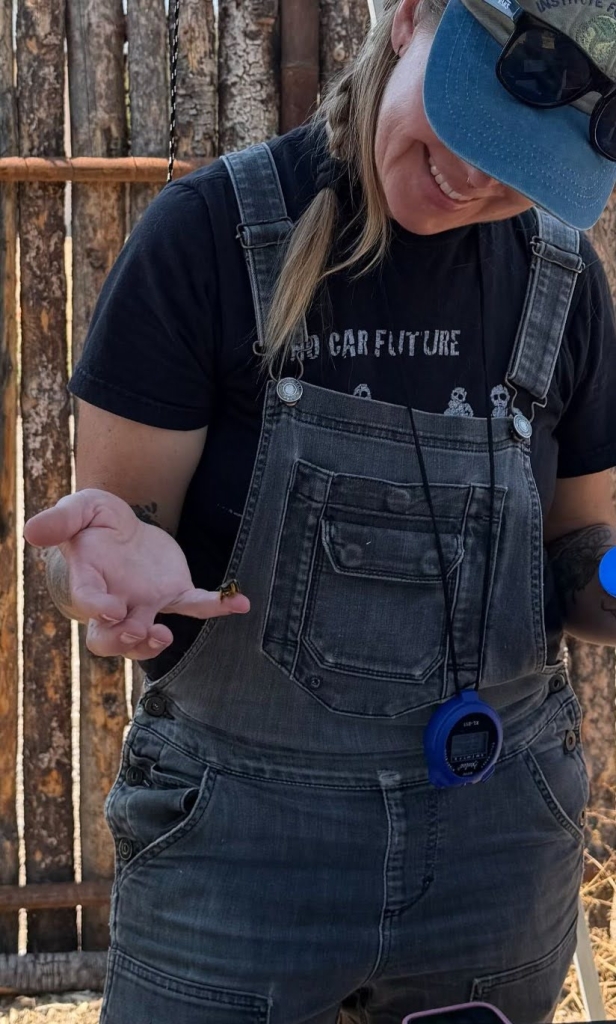
Before planting, sites were monitored for pre-installation vegetation and pollinators. “Pollinator walks” assessed the diversity and abundance of pollinators by carefully catching insects with a net, placing them on ice to put them into a harmless “sleep”, and photographing them so they could be identified with help from the Xerces Society and Lightfoot Lab from the University of New Mexico. Although minimal snow pack over the winter led to less than ideal seed collection conditions this summer, the seed crew managed to make eight priority wild seed collections and scout a variety of populations that can be collected from next year. While fall is typically ideal for planting in the Southwest, immense rainfall amounts from Hurricane Polo threw a wrench in planting plans. Schedules packed with seeding two cover crops, planting three pollinator hedgerows, prepping and planting two native seed production fields, and additional restoration and seed production priorities were tossed aside for rogue rescheduling and quick pivots. Hurdles aside, the team successfully implemented seven tools this fall, with one more cover crop scheduled for the end of the month. None of this work would have been possible without help from our dedicated participating farmers.
Additionally, IAE acquired a 22- foot long trailer, no-till seed drill, flail vac mower, crimper roller, seed broadcaster, harrow rake, 50-gallon water trailer, and a UTV that will become available in an equipment share that will be launched in 2028. Logistics, but more importantly flexibility and resilience, were the backbone of this year’s field season for the F2F Native Crop Toolkit team. Grateful and proud, the team is happy with the work they accomplished this season that will provide conservation benefits witnessed first-hand by participating farmers.
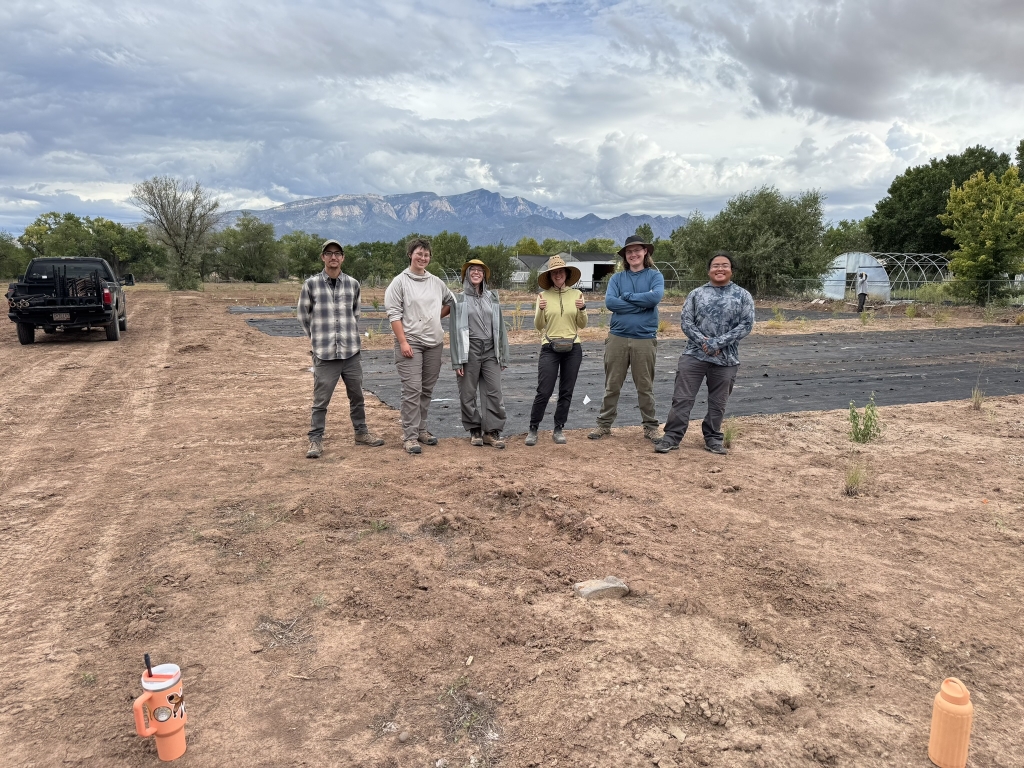
If you’re a farmer in the middle Rio Grande watershed, IAE is still looking for folks interested in on-farm habitat restoration to be installed in 2027. Please reach out to Sarah DeSimone (sarahdesimone@appliedeco.org) for details.