A Second Chance for Shaggy Horkelia
by Zade Clark-Henry, March 2026
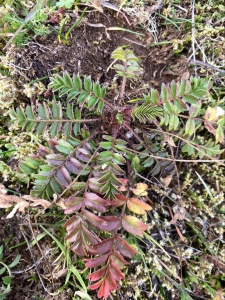
Shaggy horkelia (Horkelia congesta ssp. congesta) is a small, relatively inconspicuous member of the rose family, formerly in the genus Potentilla. In western Oregon, populations of this plant grow from relatively low elevation, wet habitats in the Willamette Valley (such as the West Eugene Wetlands) to dry, rocky habitats in the mid-elevation meadows in the foothills of the Cascades range. In 2025,IAE grew 2,500 horkelia plugs sourced from a unique mid-elevation site to outplant in similar Bureau of Land Management (BLM) restoration sites (Areas of Critical Environmental Concern; ACECs) east of Eugene. The plugs turned out very healthy, and we were all very excited to reintroduce them to several sites. However, in September, our Department of the Interior grants were terminated and the funds we had planned to use to plant the plugs vanished, leaving the plants in a state of limbo.
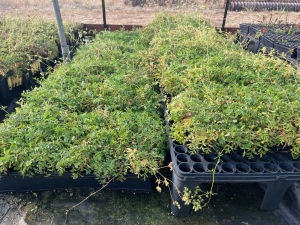
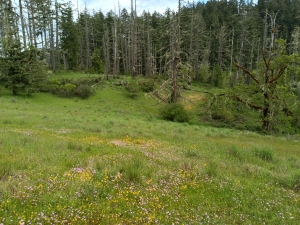
Working with BLM, we cobbled together a plan to get most of the plants back in the ground at their source site, but the sites we had planned to introduce or reintroduce them to had to be deprioritized due to capacity limitations. One such site is called SE Cloverdale, located a little over ten miles southeast of Eugene. This ACEC contains a unique meadow complex with high native species diversity, varying microhabitats, and a population of wayside aster (Eucephalus vialis, another rare native species in Oregon). Historically, the site also contained a small population of shaggy horkelia. Some restoration work occurred in the early 2010s to try to support the population, but ultimately it was extirpated from the site, likely due to changing climate conditions and degraded habitat quality. We had planned to reintroduce around 1,000 shaggy horkelia plugs in fall, but were ultimately unable to due to funding cuts.
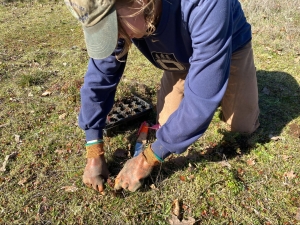
However, two trays of plants totaling around 150 horkelia were unable to be planted at the source site in the fall, and had been sitting dormant throughout the winter. IAE recently secured funding from the Rocky Mountain Elk Foundation to continue working on BLM sites in the Upper Willamette resource area, so we decided to prioritize planting these stranded shaggy horkelia at SE Cloverdale, marking the first effort to reintroduce this species to the site in well over a decade. In early February, IAE staff visited the site to plant the horkelia (along with several hundred other plants also trapped in limbo), and planted a few dense patches near their historic footprint. Although the reintroduction was small, it felt like a big win to finally be able to put these plants back out there despite grant terminations, years of absence, and logistical hurdles.
A huge thank you is owed to the Rocky Mountain Elk Foundation for supporting this critical habitat work, and to the Bureau of Land Management for coordinating and nursing these plants in our stead.