Making a lasting impression: restoring grassland bird habitat in the Chihuahuan Desert
by Katy Silber, December 2025
Consider the difference between pouring water onto a flat plate versus an ice cube tray. While the plate allows water to flow away, the tray captures and retains every drop. This simple logic is the heart of the KIS (Keyline, Imprinter, Seeding) system. KIS works by breaking up compacted soil and creating deep imprints, creating thousands of miniature reservoirs across the landscape, trapping vital precipitation, organic litter, and seeds—precious resources that would otherwise be swept away by the wind.
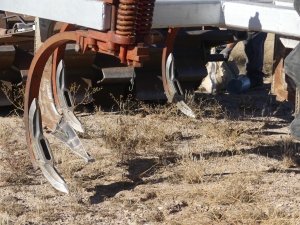
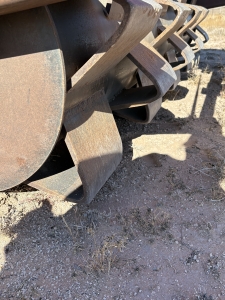
This waffle pattern triggers a powerful positive feedback loop for land recovery by creating small sanctuaries for seed germination in otherwise dry, windy “lunarscapes.” As the imprints collect moisture and wind-blown debris, the local microclimate begins to shift. The more litter and precipitation these catchments hold, the more the soil can retain moisture for weeks or even months after a precipitation event. It is an innovative strategy to jumpstart nature’s own recovery process, harnessing resources that are already present on the landscape.
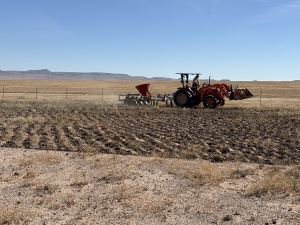
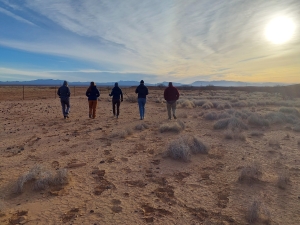
IAE is implementing this creative method to recover two sites in the Chihuahuan Desert of Southwestern New Mexico. Although deserts often evoke the image of barren landscapes with a lone hawk flying overhead (which was indeed the result of our baseline plant and bird surveys), the Chihuahuan Desert Ecoregion has a dynamic ecological history and is home to thousands of native and endemic species.
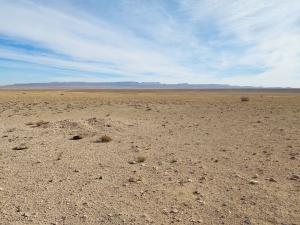
The Chihuahuan Desert is the primary wintering ground for migratory birds that breed in the Great Plains, which are the fastest declining group of birds in North America. Since 1970, species that overwinter in the Chihuahuan Desert have experienced a staggering 70% population decline. As native grasslands have been overgrazed, converted to agriculture, encroached by shrubs, or lost to desertification, birds like the Chestnut-collared longspur, Baird’s sparrow, and Sprague’s pipit lose the essential plant cover and food resources they depend on for half of their annual cycle.
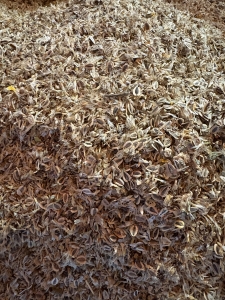
In November, we used the KIS system to seed six acres across two sites. Our seed mix consisted of native grasses and flowers to help stabilize soils, restore above and belowground plant structure, and provide key bird resources. We hope these efforts will revitalize important overwintering sites for many declining bird species. We are excited to return to these sites in the coming years to see if our seeds have taken root and our vibrant wildlife communities have returned.
Gordon Tooley is using the KIS treatment at several sites across New Mexico, particularly for dust mitigation. Listen to Gordon Tooley talk about his restoration work here or check out the feature in National Geographic’s Pictures of the Year article.
We thank the Bureau of Land Management and Carroll Petrie Foundation for their vital funding support.
Photo credits: Katy Silber