Long Migrations and Desert Pit Stops
by Emily Rees and Lani DuFresne, January 2026
Alaska to Mexico is a long trip, especially when you are the size of a softball (3.5 inches) and weigh only 4 grams. The Rufous hummingbird, Selasphorus rufus, is known for its long-distance migration (up to 3,000 miles) and territorial, feisty nature at your local hummingbird feeder. The Rufous hummingbird is just one of the 18 species that are found in New Mexico either as residents or as annual migrating visitors. To fuel their long travels they rely on specialized coevolved flowers that are brightly colored, often red, and have long floral tubes with large amounts of nectar deep inside. Hummingbird populations in the US have declined for several decades, with some species seeing significant declines due to habitat loss, climate change, and other human-influenced factors like window collisions and predation from house cats.
This past summer, ecologists from IAE’s Southwest Branch migrated around New Mexico in search of hummingbird and moth-pollinated flower species for future restoration at River for Monarchs sites. River for Monarchs (R4M) is a project started in 2023 focused on habitat and native pollinator nectar resource restoration along the Rio Grande corridor and major tributaries in New Mexico. The Rio Grande corridor and its bosque (Spanish for “forest”) habitat is a vital resource for southwest residents and migratory species like monarch butterflies and hummingbirds. As this project has grown and gained support, it was natural to expand the focal pollinator species and further diversify floral and habitat resources along this life-supporting river resource. To reflect these changes, River for Monarchs has now evolved into River for Pollinators.
Along with hummingbirds, the southwest has a high diversity of residential and migratory bat species, including the nectar-feeding endangered Mexican long-nose bat and many species of insectivorous bats. To provide support for these night hunters, IAE also collected seeds from moth-pollinated and moth host plants. By increasing resources for moths, we are not only supporting an underrepresented pollinator but also the next trophic level of consumers and encouraging a broad suite of ecological relationships.
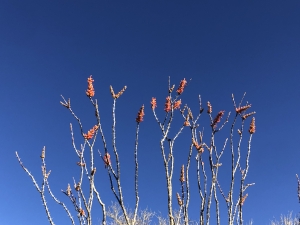
This year’s target species seed collection list was created based on extensive research about native species that provide nectar and resources for hummingbirds and moths. Scouting and seed collection for target species began in June and continued through the end of October, resulting in 42 collections of 34 species, with collection sites ranging from the northern edges of the Carson National Forest to canyons south of Socorro. Twenty-seven of these species have not been collected or outplanted for the R4M project, and 10 of these species have never been collected by any IAE seed crew. These collections include a diversity of grasses, forbs, and shrubs to support our native pollinator communities.
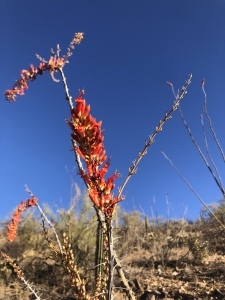
Photo credit: Lani DuFresne
Fouquieria splendens, commonly known as ocotillo, is a beacon of red blooms after summer monsoons, as if the desert caught fire. This southwest native is an easily recognizable desert staple with long, unbranched, spiny stems that can grow up to 20 feet tall. Adapted to the dry desert climate, these stems look like skeletons until they erupt with tiny bright green leaves and long red spires of flowers after rain. Hummingbirds flock to these red tubular flowers and find a nice perch to scan the horizon. Collecting these seeds required creative adaptations like using fallen limbs of their brethren to gently pull tall stems low enough or standing upslope to reach seeds while avoiding the spikey defenses.
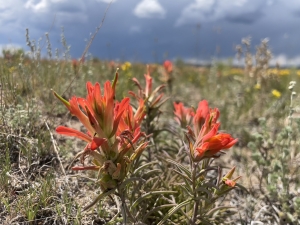
Photo credit: Mia Brann
Closer to the ground, Castilleja integra, the Southwestern paintbrush calls to hummingbird pollinators with its bright red bracts.The plants are hemi-parasitic, stretching their roots into nearby plants to siphon nutrients from them. These flowers cover hillsides with dustings of red in the open grasslands of the northern forests, and provide an extension of hummingbird habitat into higher elevation.
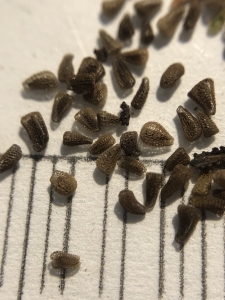
Photo credit: Lani DuFresne
In the next few months, these seed collections will be cleaned at the IAE seed lab and either distributed to nurseries, farms, and education programs for grow-out or stored for use in seed mixes at River for Pollinator restoration sites in 2026. Several potential sites have been identified for habitat enhancement, spanning multiple ecoregions throughout the state to maximize the use of our seeds and habitat continuity along the Rio Grande. These new sites will provide resource stepping stones for bats and hummingbirds as they continue their journeys across the state.