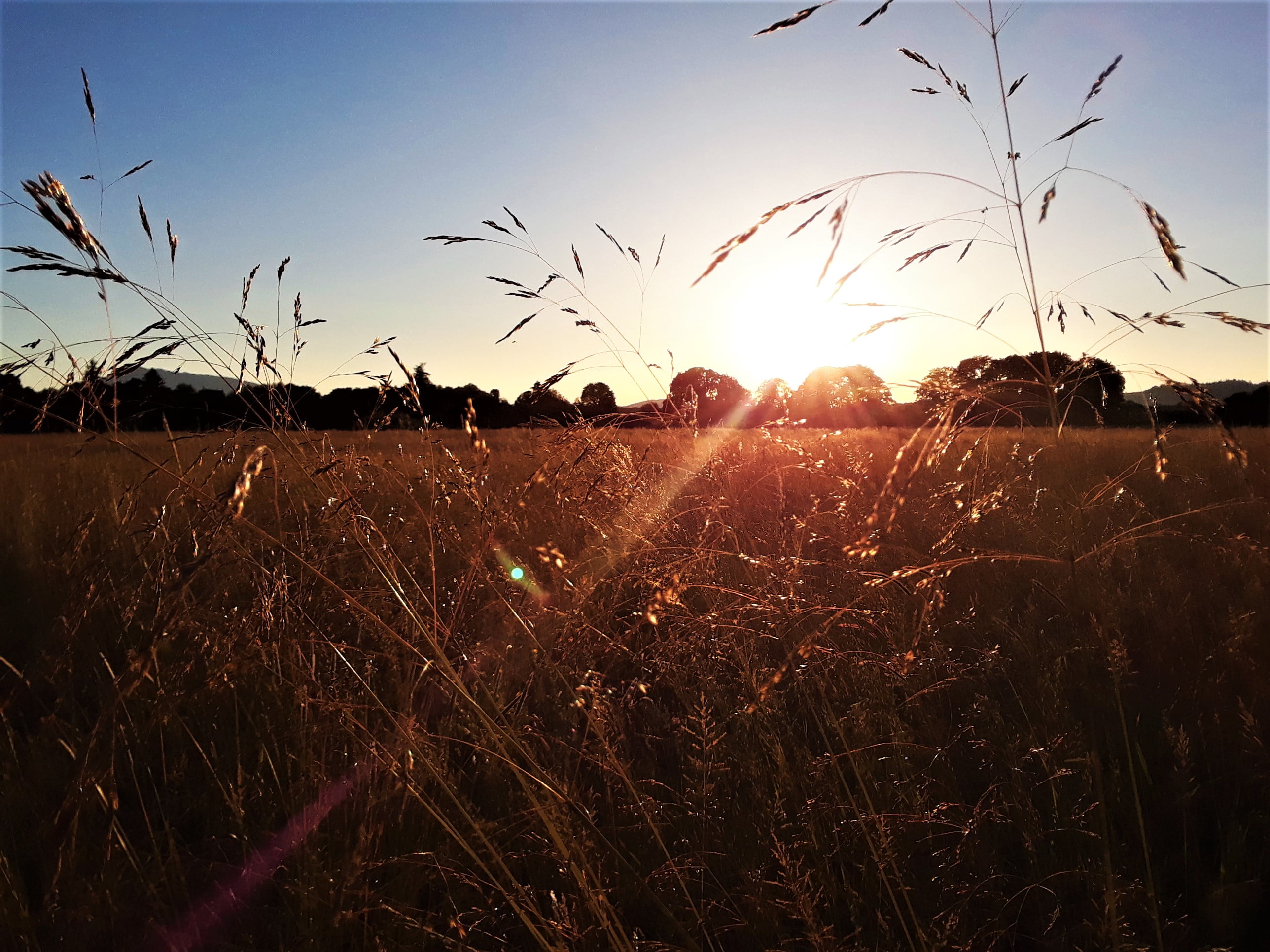
Seasons of Herbert Farm Natural Area
April

Tall camas (Camassia leichtlinii) in bloom at Herbert Farm
May

Rose checkermallow ( Sidalcea virgata) in bloom

Sunrise over Matt Creek

Cloudy evening over the western field
June
As May turns into June, peak bloom begins.

Wood lillies (Lilium columbianum) emerge in early May and late June.

In mid-June, tarweed (Madia glomerata) becomes a dominant species in the prairie.

Large-flowered (Collomia grandiflora) can form large patches in areas of the prairie that were previously wet.

Oregon Sunshine (Eriophyllum lanatum)

Tarweed (Madia elegans) at sunset.

Douglas spirea (Spiraea douglasii) adds a pop of color to riparian shrub plantings.
July

Farewell to spring (Clarkia amoena) takes over the fields in early July.

As July moves on, gumweed (Gindelia integrifolia) becomes increasingly visible in the prairie.

Dense spike-primrose (Epilobium densiflorum) is another late-July native.
August

Despite heat and drying soils, yampa (Perideridia gairdneri) begins to bloom in early August.

Cinqufoil (Potentilla gracilis) seed heads sway in the breeze.

Tarweed (Madia elegans) makes a reappearance early in August, much to the benefit of late season pollinators.

Large-flowered collomia (Collomia grandifolia) after going to seed.

Fireweed (Chamaenerion angustifolium) releases fluffy white seeds.

Last year’s gumweed contrasts with this year’s blooms.

About
Restoration
Research
Education
Get Involved
Contact
Main Office:
4950 SW Hout Street
Corvallis, OR 97333-9598
541-753-3099
info@appliedeco.org
Southwest Office:
1202 Parkway Dr. Suite B
Santa Fe, NM 87507
(505) 490-4910
swprogram@appliedeco.org