By Meghan Dugan, Oregon Department of Fish and Wildlife
October 1, 2019
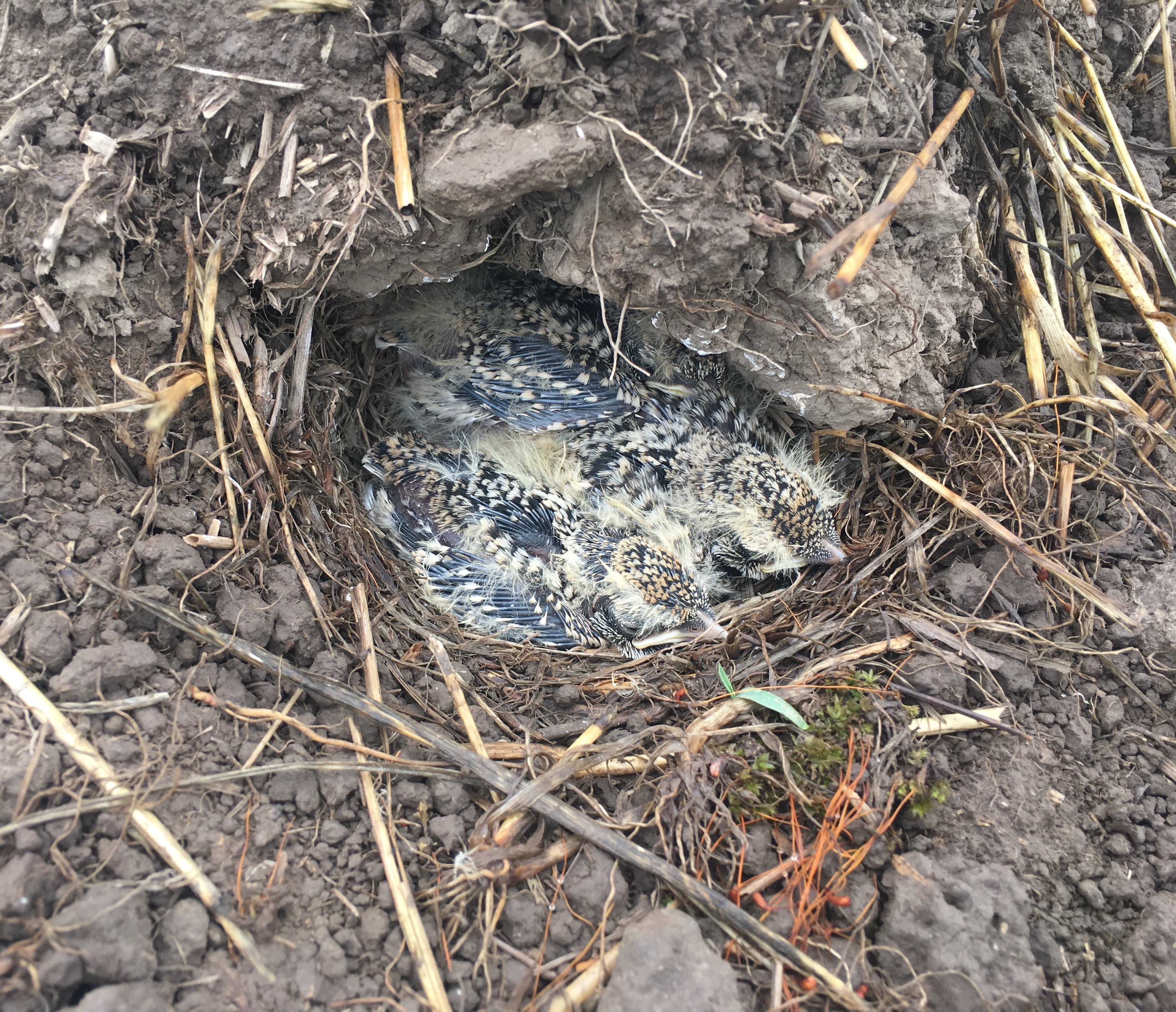
Habitat created just for streaked horned larks on Herbert Farm and Natural Area (HFNA) successfully produced its first juvenile larks.
Three eggs were laid in early June with chicks hatching in mid-July. Biologists banded the chicks which fledged their nest successfully, a significant milestone as these ground nesting birds often succumb to predators and crop harvesting. Streaked horned larks are federally listed as Threatened and are an Oregon Conservation Strategy Species in the Willamette Valley.
The Willamette Wildlife Mitigation Program-funded property is owned by the City of Corvallis, and ODFW holds a conservation easement. Since 2013, the Institute for Applied Ecology (IAE) has been restoring fields that were once in agricultural grass and seed production for the benefit of grassland birds.
For ODFW’s Willamette Wildlife Mitigation Program’s project biologist Ann Kreager, it’s gratifying to see restoration efforts paying off.
According to Kreager, streaked horned larks are a “disturbance regime” bird that prefers large, sparsely vegetated habitat free of trees and shrubs. Fire and flood suppression have drastically reduced their historic range, restricting the majority of the remaining birds in the Willamette Valley to agricultural and industrial lands. Many agricultural fields in the Willamette Valley are being converted to hazelnut trees, further reducing habitat for the larks.