Rare Plant Collections When Rain Becomes Rare
By Clay Meredith, October 2026
On a hot day in July IAE staff took a peek under hundreds of sandstone overhangs in an isolated canyon just below Acoma Pueblo. When the first leaves were spotted, it elicited shouts of joy. By the afternoon, each wilted rosette added to the dismal tone as the impact of this year’s drought became evident. We were seeking the Bluewater fleabane (Erigeron spellenbergii) which is only known from a single canyon no more than a mile wide and winding four miles into the adjacent plateau. This rare species hadn’t been observed in the last ten years, and we aimed to collect seed from it for the first time. With only a single location to collect from, carefully monitoring the development of plants is critical to a successful collection. On a subsequent visit in August, plants were found in flower. With recent rains, we hope to collect this species for the first time in early October.
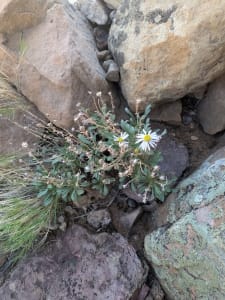
IAE’s collection of seeds from rare plants is part of a broader project undertaken by the Center for Plant Conservation to conserve rare plant species which may be vulnerable to fire. Many of these species occur in a limited geographic area and just a few fire events could drive them nearly to extinction. By preserving seed from these species in cold storage, we aim to maintain an emergency supply in the event of such a fire. Collections of rare species present a suite of unique challenges which impact our field work. Where seed crews seeking common species can visit multiple sites and select the most promising area for future collection, the number of sites where rare species occur can be much more limited.
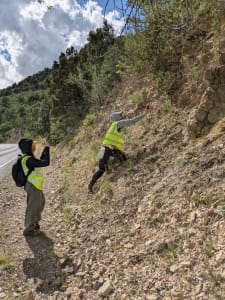
The narrow distribution of rare plants can leave them subject to localized weather conditions and population dynamics. A June visit to a roadside population of Cloudcroft scorpionweed (Phacelia cloudcroftensis) documented 35 plants. On return in September, just 6 plants were observed. A visit to the Organ Mountains in September yielded even less. Neither species of interest (Oenothera organensis and Scrophularia laevis) could be located due to dry conditions in the area. With very limited information on the habitat requirements of the plant, it’s not clear why plants failed to thrive this year, but each collection trip gathers important information.
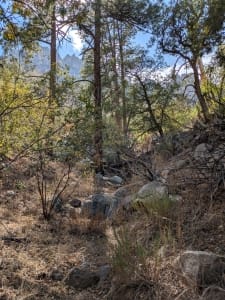
Where possible, we collect species that we already have some information about, and tie these collections to other efforts. This was the case for Fugate’s amsonia (Amsonia fugatei) which IAE staff monitor on BLM land. Information gathered during monitoring allowed for a single visit to the site for collection. In other cases, luck prevails as was the case for Springer’s blazing star (Mentzelia springeri). On our first visit to a potential collection site at Bandelier National Monument, enough seed was found on site to proceed with a collection. With boom and bust cycles impacting plant populations in different ways, we’ll keep our fingers crossed that some of the plants that couldn’t be located this year will be collectable in the future.