Field Season 2026 Roundup
by IAE Staff, April 2026
Every field season brings adventures to new and familiar places, providing novel insights and fueling keen curiosities. Sites change, species respond, and new questions emerge alongside long-term efforts that continue year after year. Across the west, IAE staff are moving between restoration sites, research plots, seed fields, and community partnerships, carrying forward work that connects plants, wildlife, and landscapes.
This season spans everything from monitoring rare amphibians and pollinators in Oregon prairies, to collecting seed from remote mountain ranges in New Mexico, to expanding native plant production through conservation programs in correctional facilities in Wyoming and New Mexico. While the settings vary widely, the work is tied together by a shared focus on learning from the land and supporting the conditions that allow native species to persist and recover.
Here is a snapshot of what staff are working on this year.
Northwest
Habitat Restoration
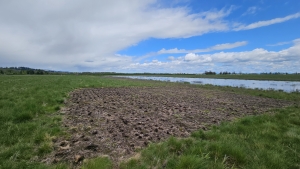
This spring, Habitat Restoration Program staff conducted amphibian egg mass surveys at Herbert Farm Natural Area. These surveys help document which species are reproducing in the site’s swales, along with their timing and abundance. The team is especially interested in detecting evidence of the previously reported Northern red-legged frog, an Oregon Conservation Strategy Species.
Looking ahead, staff are preparing for another season of pollinator surveys in prairies throughout the Willamette Valley. A seasonal crew will begin sampling soon to better understand relationships between plants and their pollinators, as well as the pollination ecology of Kincaid’s lupine, a federally and state listed species, and Golden paintbrush, which is state endangered.
On the Oregon Coast, staff recently seeded and planted seven acres of coastal meadow at Camp Westwind. With planting complete, the focus is now shifting to monitoring how native species establish and preparing for follow-up spot treatments on remaining weeds. The site also hosted a visit from coastal restoration practitioners, creating space for shared learning and discussion. Early signs of success are already visible, with Early-blue violets, Oregon iris, and Western buttercup in bloom.
Conservation Research
This year, IAE launched a collaborative restoration and research project focused on the Northwestern pond turtle, a proposed federally threatened species endemic to the Pacific Northwest. The project is designed to evaluate whether common restoration practices such as flame weeding and mowing can influence nesting behavior. As summer approaches, staff will monitor known populations to see whether turtles are using areas where vegetation has been reduced for nesting. This work addresses an important gap in what is known about this sensitive species.
IAE is also entering the second year of creating habitat for the Streaked horned lark in upland prairies. The habitat patches are developing well, and staff are hopeful these efforts will help attract larks to Herbert Farm. Trail cameras have been installed this year to increase the chances of detecting their presence.
Work is also continuing at the White River Wildlife Area following the Larch Creek Fire. Two years after the burn, staff will return to assess vegetation response across a range of habitat types, including oak and ponderosa pine forests, sagebrush scabland, and riparian areas.
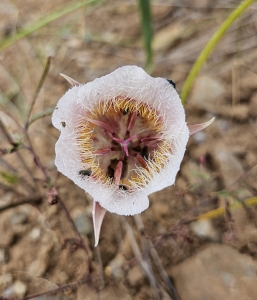
Long-term monitoring and conservation work are also underway for Calochortus coxii, or Crinite mariposa lily, in partnership with the Bureau of Land Management Roseburg District. In addition to monitoring, staff will be planting bulbs produced through IAE’s plant materials and conservation research programs to evaluate transplant success for this species.
Plant Materials
Plant Materials Program staff are continuing work with partners at The Understory Initiative to establish a field of Dwarf woolly meadowfoam (Limnanthes pumila ssp. pumila). This species is known from only two volcanic mesas in Jackson County, Oregon, making this effort an important step in supporting its conservation.
Education
In Wyoming, Conservation in Prisons staff are preparing for a summer of native seed collection for the Wyoming Seed Partnership. Crews are planning to collect five new species this season and have begun scouting locations throughout Fremont County, Wyoming to map out collection timelines.
In the nursery at the Wyoming Honor Farm, production is fully underway, with species such as Mountain snowberry, Antelope bitterbrush, and Wyoming big sagebrush sown into conetainers. Many have already begun to germinate, and staff are also propagating around 400 willow cuttings this season.
Southwest
Habitat Restoration
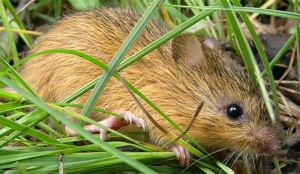
During the week of July 20, IAE staff will be planting riparian species within drainages near Alpine, Arizona to support the New Mexico meadow jumping mouse. This rare species depends on dense stands of avens, rushes, sedges, cinquefoils, and coneflowers to produce enough seed to build energy reserves during its short active period each year. Volunteers are still needed for this project. For more information, email Clay Meredith (claymeredith@appliedeco.org).
Conservation Research
Ecologists will be out monitoring post-seeding success at a solar energy site in Rio Rancho, NM. Earlier this month, 35 acres were restored with a native pollinator seed mix using a variety of seeding methods. This project represents a key step in assessing the success of multiple restoration techniques and will provide insights for how solar sites might provide critical habitat for native plant and pollinator communities
Plant Materials
Seed collection efforts are also underway across New Mexico, where staff will target seven rare plant species for seed banking. This work will take crews from the low, sandy borderlands in search of the Chihuahua scurfpea, a once abundant species that has declined for reasons that remain unclear, to the Organ Mountains, where two species found nowhere else, Scrophularia laevis and Oenothera organensis, occur.
Across multiple projects, staff are also scouting plant populations and conducting habitat and farm assessments. This includes work connected to the EPA Farmer to Farmer program, River for Pollinators, and the Southwest Seed Partnership.
Education
At the Conservation in Prisons program at Central New Mexico Correctional Facility, the team is expanding into a new unit within the facility. This growth has allowed programming to double within a year. Participants have already begun growing more than 40 species of native plants that will support restoration projects and production fields across New Mexico and Arizona.
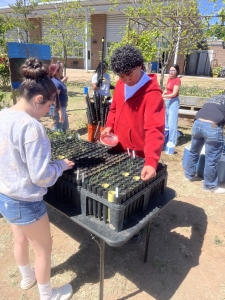
At South Valley Academy, our River for Pollinators work continues to grow through hands-on collaboration with students. This season, IAE staff partnered with 10th graders in a service learning class to start more than 1,500 native plants in their on-campus greenhouse, contributing directly to pollinator habitat along the Rio Grande. Alongside this work, students are learning about New Mexico riparian ecology and the role the bosque plays in supporting biodiversity in an arid landscape. This partnership continues to build opportunities for students to connect classroom learning with real-world restoration efforts.
From prairie restoration plots to desert drainages; seed collections in mountain ranges to nursery benches and monitoring sites, this season reflects the scale and continuity of IAE’s work across the West. Each effort is part of a longer thread of learning, stewardship, and collaboration that builds over time and across landscapes.
As the field season continues, staff will keep returning to these places, gathering new observations, and strengthening partnerships that support native species and the ecosystems they depend on. Be sure to keep an eye on our events calendar to see how you can participate in these and other projects!