Scientist discover carnivorous butterfly, and it’s spreading
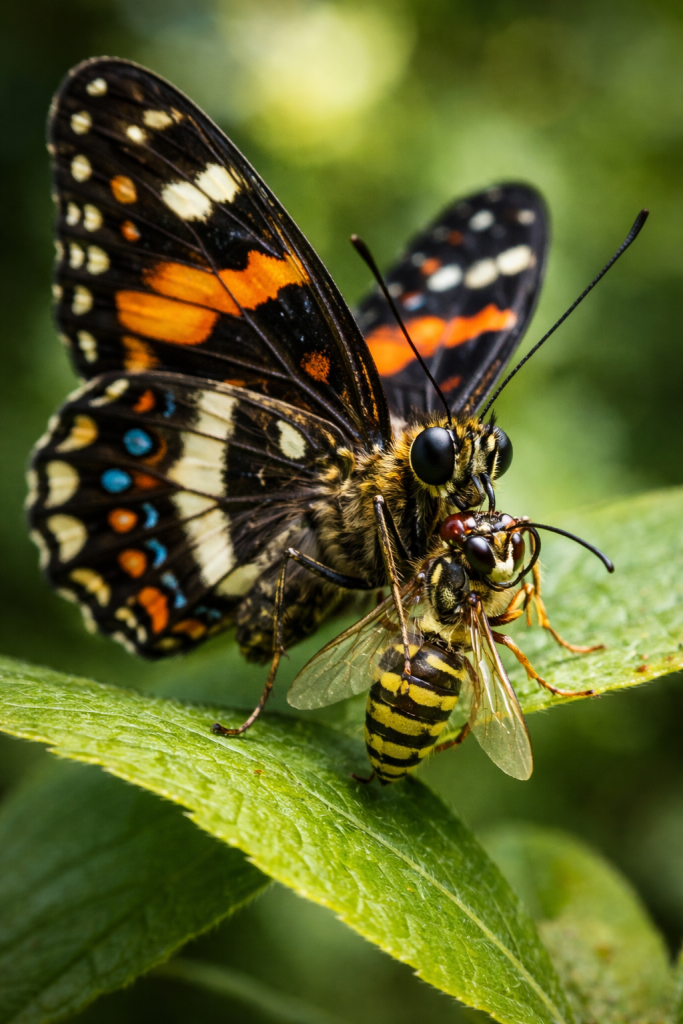
Panama City, Panama — A group of entomologists studying butterflies in South America have made a stunning discovery. While surveying a biodiversity hotspot near Parita Bay, researchers stumbled upon a previously undescribed butterfly that preys on insects and even small animals such as lizards.
The new species, now named Carovorare vampiro, recently published in the journal NatSci, has a hardened proboscis that can pierce the exoskeleton of other insects and draw out fluids. “We were astonished to find this new species with a complex carnivorous life history,” said lead author Dr. Mary Posita from the University of Illogica.
“Its diet seems to be highly diverse. We observed the species taking down bees and wasps on the wing and immediately consuming them. And they appear to hunt in packs.”
The researchers refer to the modified mouthparts of the butterfly as a “unifang,” and have dubbed the new creature “buttervamp” in reference to its Dracula-like abilities.
“We are very excited about this new find but also concerned that the species appears to be spreading,” noted professor B. Stoker, who coauthored the recent article. “These butterflies are very aggressive and adaptable. Because of their close proximity to the Panama Canal, they are hitching rides on ships bound for international destinations.”
The researchers note that one of their colleagues was attacked by a swarm of buttervamps and only escaped by jumping into a river. “It seems kind of silly to be afraid of a butterfly, but when 100 of them go after you at once with their unifangs it kind of shifts your thinking, you know?” commented Dr. Posita. The species flies primarily during the day but can be active during the full moon as well.
Dr. Alphonse Feniseca from the North American College of Pemphigus, who was not involved with the study, described the finding as “gobsmacking and then some.”
While camped at their field site the team of biologists caught several specimens landing on a dish of butter and consuming the fatty substance. “This behavior literally puts the butter in butterflies,” said Stoker. “We also noticed that they completely avoided a dish of garlic, so we started using that as a buttervamp repellent and it seemed to work!”
In a fit of semantic hijinx, the researchers are trying to resolve the question that since the buttervamps eat butter, does that make them cannibals?
We hope you enjoyed this April Fools Day spoof! And please note that the illustration is an AI fabrication.

About
Restoration
Research
Education
Get Involved
Contact
Main Office:
4950 SW Hout Street
Corvallis, OR 97333-9598
541-753-3099
info@appliedeco.org
Southwest Office:
1202 Parkway Dr. Suite B
Santa Fe, NM 87507
(505) 490-4910
swprogram@appliedeco.org