Gardening for Nature Survey report now available!
Thanks to everyone who took the Gardening for Nature Survey. The ~60-page report is now available for free download.
Replacing lawn with native plants pays off quickly, according to a new report from the Institute for Applied Ecology, prepared with Design Native Northwest. In a survey of 1,274 gardeners across the United States and southern Canada, more than 80% saw pollinators and birds using their new native gardens within the first year, and more than 95% within three years.
The Gardening for Nature Survey asked experienced native plant gardeners what worked, what didn’t, and what they wish they’d known. Most projects start from ordinary lawns (69%) or weedy patches (50%) on single-family lots.
“People told us, in their own words, that this works,” said Tom Kaye, founder and chief scientist at IAE and one of the report’s authors. “Their gardens fill with bees and birds within a year, their neighbors notice, and some of those neighbors start their own. We wanted to collect that hard-won experience so the next gardener can benefit from their experience.”
Key findings
- Gardeners are happy. 58% are “extremely satisfied” with naturescaping their yards; fewer than 2% are dissatisfied.
- Neighbors approve, and it spreads. More than 85% receive positive or very positive feedback. Many describe neighbors starting their own native gardens, and seed and plant swaps springing up.
- What works. Sheet mulching (cardboard under wood chips) was the top-rated way to remove lawn. Plants in small or 1-gallon pots earned the highest satisfaction (4.3–4.4 out of 5); starting from seed scored lowest.
- What they’d do differently. 62% wish they’d better understood how big plants get and where they thrive. A third would control weeds earlier, and a quarter would put in paths first.
- What stands in the way. Cost (46%) and physical labor (37%) are the biggest barriers. Gardeners want demonstration gardens (60%), seed and plant sharing networks (52%) and tours (47%).
- A source of joy. Nearly half of written responses describe the garden as a source of happiness, calm or hope, using words like “therapeutic,” “sanctuary” and “life-changing.”
Climate change is already in the garden
A follow-up survey of 349 respondents found that 87% expect climate change to affect their gardens, and about a third already see native plants struggling. Western red cedar was named most often, followed by other conifers. Sixty-one percent have changed which species they plant, and 83% are at least moderately interested in using native plants sourced from hotter, drier places — a form of assisted migration. Several gardeners described a toll on themselves, too: working only in early mornings during heat waves, and grief over ecological loss. And at the same time, gardening for nature gives them hope.
“Gardeners are running thousands of small climate experiments in their own yards,” said Tom Kaye. “They’re watching cedars brown, shifting what they plant, and asking what ‘native’ should mean in a warming world. Researchers and nurseries should be listening.”
The report also includes a list of books, nurseries, websites, gardens and podcasts that respondents recommended, organized as a starting point for gardeners anywhere.
About the survey
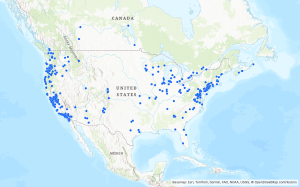
The online survey ran from November 19, 2025, to March 6, 2026, and was shared through native plant societies, nurseries, professional organizations, Facebook groups, soil and water conservation districts and gardening conferences. A climate supplement was sent to 828 respondents in April–May 2026 (349 responses, 42%). Most respondents live on the U.S. West Coast, with substantial numbers on the East Coast and elsewhere; 42% are over 65.
About the authors
Tom Kaye, PhD, is founder and chief scientist of the Institute for Applied Ecology and a courtesy associate professor in the Department of Botany at Oregon State University. His research and policy work focuses on endangered species conservation and reintroduction, habitat restoration, and responding to global change. He serves on the board of directors of the Society for Ecological Restoration.
Peter Katon is the owner of Design Native Northwest, a landscape design company based in Portland, Oregon. Inspired by native plants ecological balance and beauty that evolved over millennia, Peter’s landscape design work aims to increase awareness and appreciation for the cultural and ecological relationships between humans and the natural environment. Peter has a master’s degree in urban and regional planning from Portland State University, and is a graduate of Portland Community College’s landscape technology program.
Original survey invitation:
Got experience gardening with native plants? We want to hear it! Whether you planted a pocket meadow or transformed your whole yard, your story can help others create buzzing, blooming, wildlife-friendly spaces.
This quick North America–wide survey asks what worked, what didn’t, and what surprised you along the way. Share your methods, the resources you used, the critters you spotted, and even how the neighbors reacted.
Thanks for taking a few minutes to jump in! It only takes about 10 minutes, and your insights will help gardeners everywhere build better habitat for pollinators and wildlife. We’ll share a summary—with tips and recommendations—in early 2026 on the Institute for Applied Ecology website
—————————————–
We invite you to share your experience gardening with native plants (often called naturescaping or meadowscaping), in order to help new and experienced gardeners have more success with their projects. This landscape design approach promotes coexistence of people and nature by integrating native plants, pollinators, and wildlife-friendly features, benefiting local ecosystems and reducing negative environmental impacts.
This survey, which is being distributed in North America, invites you to share what went well and what could be improved with your native plant gardening efforts. Questions relate to what methods you used, technical assistance and resources used (or needed), observed results, satisfaction with outcome, neighbors’ response, and more.
Thank you for taking the time to respond and share your experience! It should take approximately 10 minutes to complete. The results will help us and others improve the process and outcomes of gardening for nature. By completing the survey, you will help others who are embarking on gardening projects aimed at promoting habitat for pollinators and wildlife achieve a more successful outcome. A summary of this survey along with recommendations for native plant gardeners and organizations will be distributed in early 2026 and posted on the Institute for Applied Ecology and Design Native Northwest websites.
Photo credits
Hummingbird: Mary Ann Whitney-Hall
Garden: L. Puhlman