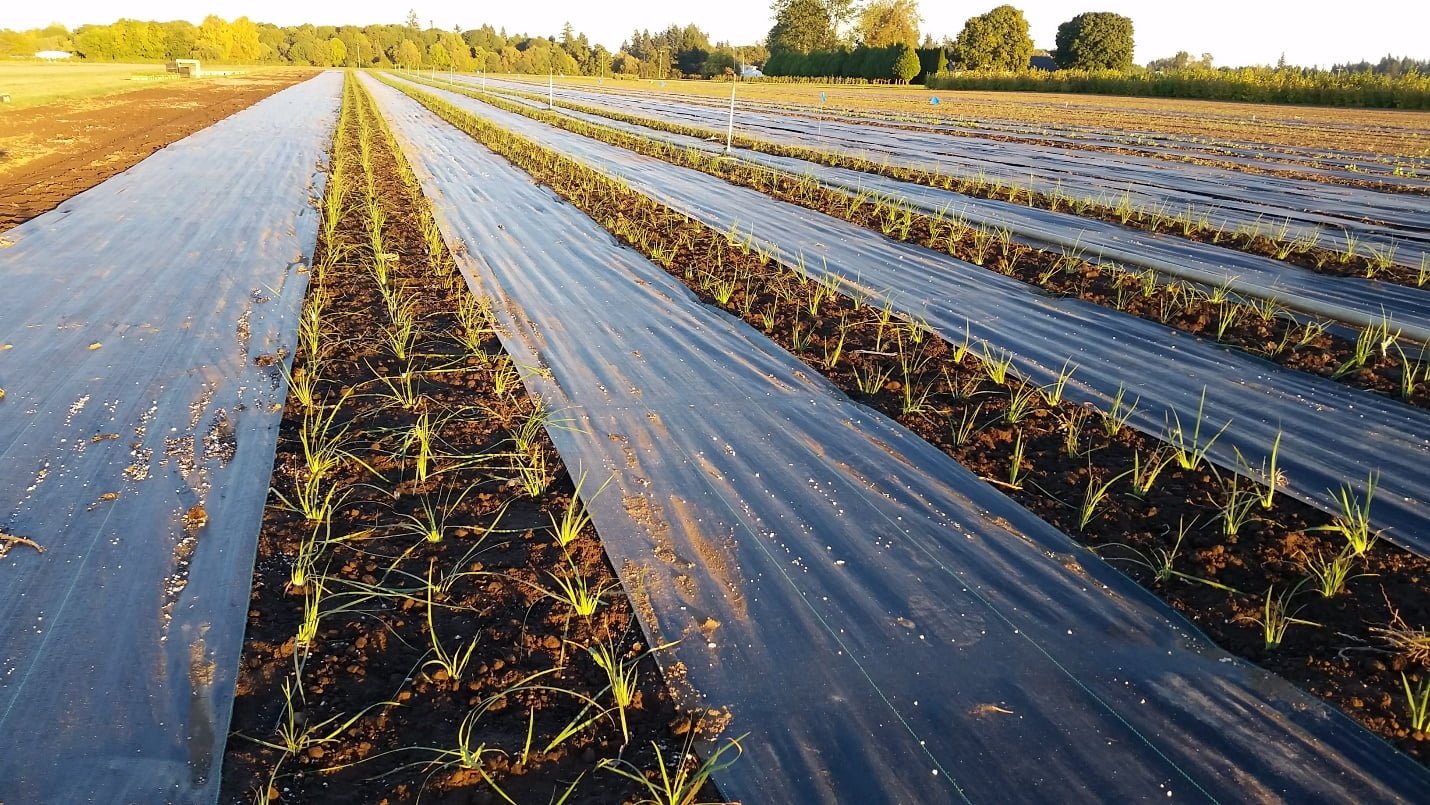
The goal was to create a supply of seed that is genetically diverse and ecologically appropriate. The approach taken was to collect seed from many source populations throughout the Willamette Valley to capture a broad genetic base for each species. Research was conducted to evaluate genetic differences between populations and determine when seed should be combined or kept separate (Miller et. al. 2011). This seed was then used to establish farm fields of high priority native species so partners could purchase seed for use in their restoration and revegetation projects. Within the first year, the WVNPP built an organizational infrastructure for the partnership, hired a seasonal crew for seed collection, and entered its first two species into production – slender cinquefoil (
Potentilla gracilis) and western goldenrod (
Solidago lepida).
Since its beginnings nearly a decade ago, the WVNPP has much to celebrate. Over six seasons, crews have collected 72 pounds of seed from 27 native species from hundreds of wild populations scattered throughout the Willamette Valley. There are now 21 fields in production which has resulted in a yield of over 3,100 pounds of native seed. Approximately 2/3 of this seed has been distributed to partners and spread in prairie habitats throughout the ecoregion. The partnership has grown to 32 partner organizations who support the WVNPP.
The WVNPP is continuing to build on this success by increasing our marketing and outreach to gain new membership while we wait patiently for new species to produce seed and for restored prairies to brighten the Willamette Valley with a vibrant palette of wildflowers throughout the growing season once again.
Reference:
Miller, S.A., A. Bartow, M. Gisler, K. Ward, A. Young, and T. Kaye. 2011. Can an ecoregion serve as a seed transfer zone? Evidence from a common garden study with five native species. Restoration Ecology. 19(201):268-276.