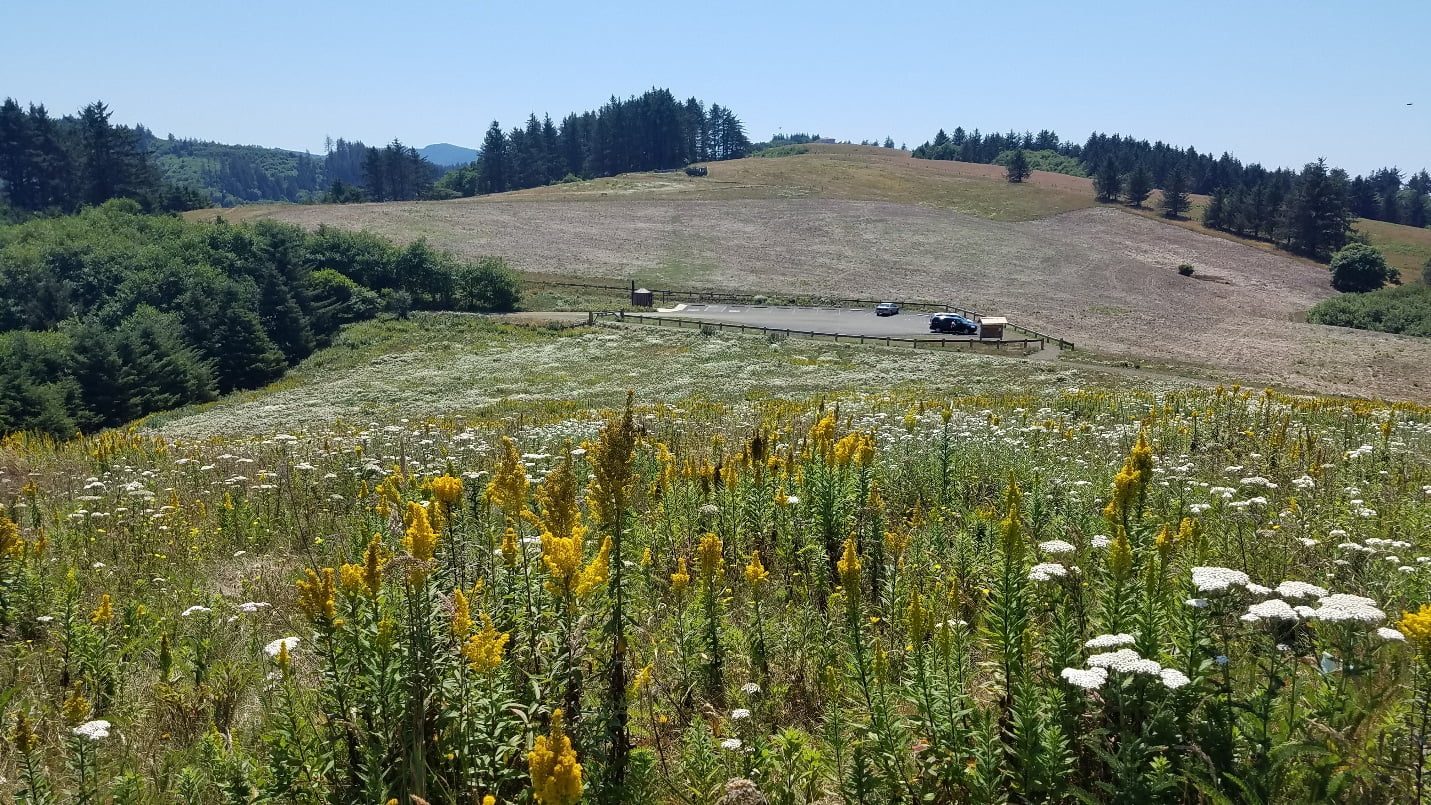
To seed or not to seed – it is sometimes a tricky question. Seed too early and you can have years of expensive weed treatments, while tip-toeing around the precious native species. Compounding this challenge, the native wildflower and grass seed and container plants needed for this effort are either not available, or are expensive and difficult to acquire. When restoration work began at Nestucca almost a decade ago, a very limited number of species had seed available in significant enough quantity to cover 35 acres. Increasing the availability and diversity of coastal prairie species has taken years. This work involved identifying remnant populations of native species, collecting their seed in the wild, using that seed to start a seed production field; turning a handful of wild-collected seed into tens of pounds of production seed. Many prairie natives are finicky growers, requiring special attention to maximize seed harvest in an efficient manner.
On October 2, we were finally able to seed the last 14 acres at Nestucca with a diverse mix of natives. The fast-germinating annual species in the mix, such as the shortspur seablush (Plectritis brachystemon), should be evident within a week or two. Shortly after that, the two native fescue grasses, as well as yarrow, one of the important nectar plants for the adult butterflies, will emerge. Some of the other species require several weeks to several months of cold temperatures to lift their dormancy and stimulate germination. Some species like warmer soil temperatures, and won’t appear until spring. Others, such as West coast goldenrod, will exist only as small plants in the first year and not reach their real glory until years two to three. In the coming weeks, months, and years, more species will be added to diversify the community so as to be able to support a broad array of pollinators and other wildlife.