Table Rocks Rocks!
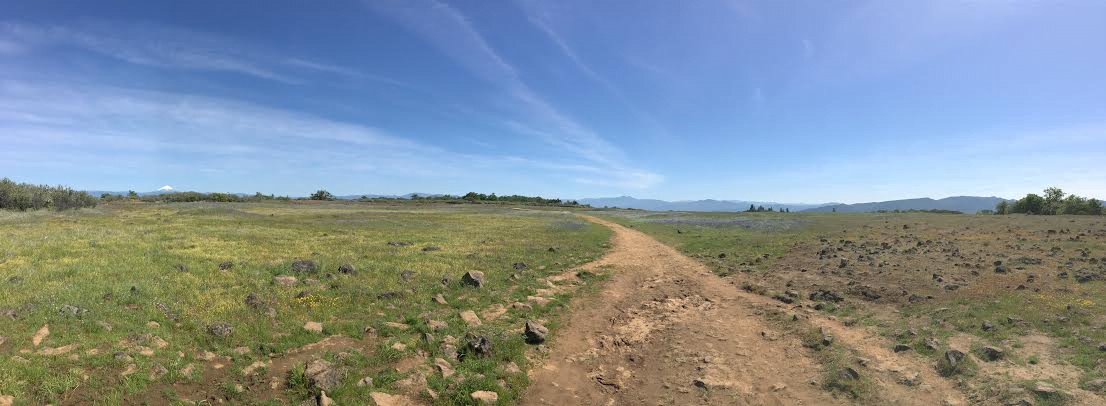
For our first trip of the field season, we visited Table Rocks outside of Medford, Oregon to study Limnanthes pumila ssp. pumila, or dwarf woolly meadowfoam, a threatened endemic species that relies on vernal pool habitat. Table Rocks consists of two plateaus formed by volcanic activity and shaped by erosion. The trails up to the plateaus wind through oak savanna which is home to many different species, including Cooper’s hawk, turkey vulture, lark sparrow, and wild turkey that we observed on our hikes. Once you reach the plateaus, you are surrounded by a magnificent wildflower display and a plethora of busy pollinators, and can enjoy a spectacular view of Mount McLoughlin.

This is a mature dwarf woolly meadowfoam after it has blossomed.

We monitored plant communities, which involved challenging grass identification.

The crew on top of Lower Table Rock after a long, steep hike.

A blanket of camas along the trail.

A young amateur botanist that we met. He enthusiastically pointed out flowers to his mom!

A remaining vernal pool at Lower Table Rock. A home to dwarf woolly meadowfoam as well as fairy shrimp, frogs, and diving beetles!

We saw evidence of elk grazing on wild onion and other plants.

A spectacular view of Mount McLoughlin from Upper Table Rock.
We really enjoyed getting to know each other on our first trip and learning about the vernal pool ecosystems at Table Rocks!

About
Restoration
Research
Education
Get Involved
Contact
Main Office:
4950 SW Hout Street
Corvallis, OR 97333-9598
541-753-3099
info@appliedeco.org
Southwest Office:
1202 Parkway Dr. Suite B
Santa Fe, NM 87507
(505) 490-4910
swprogram@appliedeco.org